Friday, 24 April 2026

Stay Protected, Explore Fearlessly

Stay Protected, Explore Fearlessly

The Importance of Adventure Sports Helmet in Outdoor Activities

Adventure sports are all about thrill, exploration, and pushing limits. Whether you are scaling mountains, riding rugged trails, or exploring caves, safety should always come first. One of the most essential pieces of protective gear is the Adventure sports helmet, designed to safeguard you from unexpected impacts and injuries. When combined with other safety tools like a fall arrester, it creates a reliable protection system for high-risk activities.

Why an Adventure Sports Helmet is Essential

An Adventure sports helmet is specifically designed to provide protection during high-impact and outdoor activities. Unlike regular helmets, these are built with lightweight materials, proper ventilation, and strong impact resistance. They protect the head from falls, collisions, and debris, making them a must-have for any adventure enthusiast.

fall arrester suppliers

In many activities, especially those involving heights, pairing an Adventure sports helmet with a fall arrester ensures maximum safety. While the helmet protects your head, the fall arrester prevents dangerous falls, creating a comprehensive safety setup.

Adventure Activities That Require a Helmet

1. Rock Climbing and Mountaineering
Climbing steep surfaces exposes individuals to falling rocks and sudden slips. An Adventure sports helmet protects against head injuries, while a fall arrester acts as a backup safety device on the rope system. Together, they provide complete protection during climbs.

2. Rope Access and Industrial Climbing
In professional environments like maintenance or inspections, rope access methods are widely used. Here, an Adventure sports helmet shields workers from falling objects, and a fall arrester ensures safety in case of slips or rope failure. This combination is essential in both recreational and industrial climbing scenarios.

3. Caving and Spelunking
Exploring caves involves navigating tight spaces, low ceilings, and uneven terrain. An Adventure sports helmet protects against head bumps and falling debris. In vertical caves, a fall arrester can be used as part of the rope system for added safety.

4. Mountain Biking and Off-Road Cycling
Riding through rough terrains increases the risk of falls and collisions. An Adventure sports helmet provides critical head protection, reducing the severity of injuries during accidents.

5. Ziplining and High Ropes Courses
These activities involve heights and speed, making safety gear essential. An Adventure sports helmet protects participants from accidental impacts, while a fall arrester ensures that any unexpected fall is immediately controlled.

6. Paragliding and Aerial Sports
In aerial adventures, maintaining safety is crucial. Helmets protect against impact during takeoff and landing, while systems that may include a fall arrester enhance safety during equipment handling and setup phases.

Benefits of Using an Adventure Sports Helmet

1. Maximum Head Protection
The primary function of an Adventure sports helmet is to absorb impact and reduce the risk of serious head injuries.

2. Comfort and Durability
Modern helmets are designed for long-duration use, offering comfort, ventilation, and durability even in harsh environments.

3. Versatility Across Activities
From climbing to cycling, an Adventure sports helmet is suitable for multiple sports, making it a versatile investment.

4. Enhanced Safety with Additional Gear
When used alongside a fall arrester, the helmet becomes part of a complete safety system, especially in high-altitude and rope-based activities.

Choosing the Right Helmet

Selecting the right Adventure sports helmet depends on the activity. Look for certifications, proper fit, ventilation, and compatibility with other gear like harnesses and communication devices. For rope-based adventures, ensure that your helmet works seamlessly with your fall arrester and other climbing equipment.

Adventure sports offer unforgettable experiences, but they also come with risks. Investing in the right safety gear, especially an Adventure sports helmet, is essential for protecting yourself during these activities. When combined with tools like a fall arrester, it ensures a higher level of safety, allowing you to explore confidently and responsibly. Prioritize safety, choose the right equipment, and enjoy every adventure with peace of mind.


Enhancing Safety at Heights

Enhancing Safety at Heights: The Role of Fall Arrester in Rope Access Methods

Working at heights is a critical part of industries such as construction, oil & gas, and infrastructure maintenance. In these environments, safety is not just important - it is essential. One of the most reliable techniques used today is rope access, a method that allows technicians to reach difficult areas efficiently. At the core of this system lies an essential safety device: the fall arrester. When combined with high-quality rope access equipment, it significantly reduces risks and enhances worker protection.

What is Rope Access and Why It Matters

Rope access is a safe and cost-effective method of working at heights using ropes, harnesses, and specialized gear. Unlike traditional scaffolding, it allows technicians to move vertically and horizontally with ease, saving time and reducing setup costs. However, the success of this method depends heavily on the reliability of rope access equipment, especially safety devices like the fall arrester.

Understanding the Fall Arrester

A fall arrester is a safety device designed to stop a worker’s fall instantly in case of a slip or loss of balance. It works by locking onto a rope or lifeline when sudden movement is detected, preventing further descent. This immediate response is crucial in minimizing injury and ensuring compliance with international safety standards.

fall arrester

In rope access systems, the fall arrester is typically connected to a backup safety line, acting as a secondary protection system alongside the primary working rope. This dual-rope system ensures maximum safety for technicians operating at heights.

How Fall Arresters are Used in Rope Access Methods

In rope access operations, workers are always secured by two ropes: a working line and a safety line. The fall arrester is attached to the safety line and moves freely with the user during normal operation. If the worker slips or falls, the device locks automatically, stopping the fall within a very short distance.

This integration makes the fall arrester an indispensable part of modern rope access equipment. It ensures that even in unexpected situations, workers remain protected without interrupting their workflow.

Key Benefits of Using Fall Arresters

1. Enhanced Safety
The primary advantage of a fall arrester is its ability to prevent serious injuries. By stopping falls instantly, it provides a critical layer of protection for workers operating at dangerous heights.

2. Compliance with Safety Standards
Using certified rope access equipment that includes a fall arrester helps companies meet international safety regulations. This is especially important in industries like oil & gas, where compliance is strictly monitored.

3. Increased Efficiency
Rope access methods are already known for their speed and flexibility. Adding a fall arrester ensures safety without slowing down operations, allowing technicians to work confidently and efficiently.

4. Versatility Across Applications
From high-rise building maintenance to offshore platform inspections, the fall arrester is suitable for a wide range of applications. Its compatibility with various types of rope access equipment makes it a versatile safety solution.

5. Reduced Risk and Liability
By minimizing the chances of accidents, companies can reduce downtime, insurance costs, and legal liabilities. Investing in quality rope access equipment with a reliable fall arrester is a proactive step toward safer operations.

Conclusion

Safety should never be compromised when working at heights. The combination of advanced rope access techniques and dependable safety gear has transformed how industries approach high-risk tasks. Among these tools, the fall arrester stands out as a life-saving device that ensures protection without limiting productivity.

By integrating a fall arrester into your rope access equipment, you not only enhance worker safety but also improve operational efficiency and compliance. As industries continue to evolve, prioritizing such safety solutions will remain essential for sustainable and secure work environments.


Monday, 13 October 2025

Usage of Dunnage Bag and Bentonite Clay

Usage of Dunnage Bag and Bentonite Clay in Modern Industries

In industrial logistics and material protection, two essential products stand out for their effectiveness and versatility — the dunnage bag and bentonite clay. Both play vital roles in ensuring the safety and integrity of goods during transportation and storage. The dunnage bag is a simple yet highly effective cushioning solution for securing cargo, while bentonite clay is widely used for moisture control, sealing, and industrial applications. Understanding their usage and benefits helps industries optimize packaging, transportation, and quality preservation processes.

Dunnage Bag: Reliable Protection for Cargo

A dunnage bag is an inflatable cushion designed to secure and stabilize cargo during transit. It prevents goods from shifting inside containers, trucks, ships, or railcars, reducing the risk of damage caused by impact or vibration. The dunnage bag is typically made from strong, multi-layered materials such as kraft paper and polyethylene, ensuring it can withstand heavy loads and maintain air pressure for long durations.

dunnage bag suppliers uae

The primary usage of a dunnage bag is to fill void spaces between cargo units, locking them in place. This eliminates the possibility of movement during transportation, which is one of the main causes of product damage. Companies transporting delicate or expensive items—such as electronics, glass, or machinery—often rely on dunnage bags to safeguard their shipments. They are also eco-friendly, reusable, and cost-effective compared to wooden braces or foam fillers.

Another significant advantage of using dunnage bags is their adaptability. They come in various sizes and types, including paper, vinyl, and woven polypropylene options, making them suitable for a wide range of applications. Their quick inflation and deflation process make handling efficient, saving both time and labor. Whether in international shipping or domestic distribution, the dunnage bag remains a trusted solution for preventing cargo movement and ensuring safe delivery.

Bentonite Clay: A Natural Moisture Controller and Sealing Material

Bentonite clay is a natural absorbent material composed primarily of montmorillonite. It is widely recognized for its remarkable swelling and water-absorbing properties. The bentonite clay expands when wet and forms a dense, impermeable barrier, making it highly effective in moisture control, sealing, and filtration applications. In industries like packaging, construction, oil drilling, and environmental engineering, bentonite clay plays a crucial role in maintaining material integrity and environmental safety.

One of the most common industrial uses of bentonite clay is in desiccants and moisture-absorbing packaging. It protects products such as electronics, pharmaceuticals, and food items from humidity damage during storage and transport. The bentonite clay absorbs excess moisture, keeping the environment dry and preventing mold, corrosion, or degradation. Its non-toxic, natural composition makes it a sustainable alternative to synthetic drying agents.

Additionally, bentonite clay is used extensively in construction and civil engineering. When mixed with water, it forms a thick gel used for sealing boreholes, lining ponds, and stabilizing soil. In environmental protection, bentonite clay acts as a natural barrier to contain hazardous waste and prevent leakage from landfills or storage sites. Its effectiveness as a sealing agent and moisture controller continues to make it indispensable across multiple industries.

Conclusion

Both the dunnage bag and bentonite clay have become integral components of modern industrial operations. The dunnage bag ensures the safe transportation of goods by preventing cargo movement, while bentonite clay provides exceptional protection against moisture and environmental damage. Together, they contribute to efficient logistics, sustainable practices, and product integrity.

As industries evolve toward safer and more eco-conscious solutions, the role of the dunnage bag and bentonite clay will continue to expand. Their combined use enhances operational reliability, reduces losses, and supports long-term environmental responsibility — making them indispensable assets in global industrial supply chains.


Tuesday, 7 October 2025

Logistics and Industrial Applications

The Importance of Dunnage Bags and Bentonite Clay in Modern Logistics and Industrial Applications

In the fast-paced world of logistics and industrial manufacturing, dunnage bags and bentonite clay have emerged as essential materials that ensure product safety, stability, and quality. While both serve different purposes, they share a common goal — protecting goods and maintaining standards throughout the transportation and production process.

Dunnage Bags: The Unsung Heroes of Cargo Protection

A dunnage bag, also known as an air cushion bag, plays a vital role in securing cargo during transportation. These bags are strategically placed between pallets or containers to prevent shifting, vibration, or collision damage. Whether transporting goods by sea, road, or rail, dunnage bags act as shock absorbers, maintaining load stability throughout the journey.

dunnage bag suppliers UAE

Manufactured from high-quality materials such as polyethylene and kraft paper, dunnage bags are designed to withstand significant pressure. They are available in multiple sizes and strengths to accommodate various load types. The use of dunnage bags not only reduces the risk of damage but also minimizes financial losses due to product breakage. Additionally, they are easy to install, cost-effective, and environmentally friendly, as many are made from recyclable materials.

For industries like automotive, electronics, and FMCG, where safe and stable transport is crucial, dunnage bags provide an efficient and reliable solution. Their ability to adapt to different container sizes and shapes makes them a preferred choice in global logistics.

Bentonite Clay: A Versatile Industrial Material

Bentonite clay is another remarkable material widely used across various industries due to its unique absorption and swelling properties. Formed from volcanic ash, bentonite clay primarily consists of montmorillonite — a mineral known for its ability to absorb water and other liquids efficiently. This characteristic makes bentonite clay an indispensable component in applications such as drilling, construction, cosmetics, and environmental protection.

In the oil and gas sector, bentonite clay is used as a key ingredient in drilling mud to cool and lubricate the drill bit while stabilizing boreholes. In construction, it is used in waterproofing systems, particularly in sealing foundations and underground structures. Bentonite clay also finds applications in the production of cat litter, pharmaceuticals, and purification processes due to its natural filtering and detoxifying capabilities.

Moreover, bentonite clay plays a significant role in environmental conservation. It is utilized in waste management and landfill liners to prevent contamination of groundwater by forming impermeable barriers. Its eco-friendly nature and cost-effectiveness make it a sustainable choice for modern industries seeking environmentally responsible materials.

Both dunnage bags and bentonite clay contribute significantly to the safety, stability, and efficiency of industrial operations. While dunnage bags ensure cargo security during transport, bentonite clay enhances product quality and environmental safety across multiple applications. Their versatility, affordability, and sustainability make them indispensable in today’s competitive and eco-conscious world. Investing in the right dunnage bags and bentonite clay solutions can help businesses achieve better logistics performance, cost efficiency, and long-term reliability in their operations.

Wednesday, 2 July 2025

Dunnage Bags and its uses


Dunnage Bags and its uses

Dunnage Bags: The Silent Guardians of Cargo Integrity

Often overlooked but critically important, dunnage bags are the unsung heroes in the world of shipping and logistics. These inflatable cushions don't just fill empty spaces — they create a protective force field that absorbs shocks, prevents cargo shifts, and minimizes transit damage. Whether it's a delicate electronic device or a bulky industrial load, dunnage bags ensure that every item arrives in the exact condition it was packed.

dunnage bag

What makes them unique? Their adaptability. Dunnage bags expand to fit any void — making them the only customizable buffer that transforms any container into a secure, damage-resistant environment. They're lightweight, reusable, eco-friendly, and easy to install, replacing bulky wood bracing and reducing labor and material costs.

In essence, dunnage bags don’t just support cargo — they support the promise of safe, reliable delivery.

Bentonite Clay: Nature’s Intelligent Multitasker

Bentonite clay isn’t just a mineral — it’s a marvel of nature with an almost intuitive ability to adapt across industries. With its powerful absorption and swelling properties, bentonite behaves like a smart sponge: it draws in moisture, toxins, and impurities, then seals, stabilizes, or purifies — depending on what’s needed.

In cosmetics, it's a natural detoxifier — clearing skin of impurities without harsh chemicals. In drilling, it cools and stabilizes boreholes with precision. In agriculture, bentonite clay acts like a soil enhancer, retaining moisture in arid lands. Even in winemaking and pharmaceuticals, it plays a quiet role — clarifying, binding, and purifying behind the scenes.

But what truly sets bentonite apart is its versatility: it’s one of the few materials that can serve both beauty and industry, health and engineering, healing and hardening. Bentonite clay doesn’t just adapt — it elevates every environment it touches.


Wednesday, 14 May 2025

Why Fall Arrester is Essential in Rope Access


Why Fall Arrester is Essential in Rope Access

Why It's Essential in Rope Access

Rope access relies on two independent rope systems: a main working line and a backup safety line. The fall arrester is connected to the backup rope and the technician’s harness. In case the main rope fails — due to wear, shock loading, or human error—the fall arrester becomes the fail-safe.

Its inclusion is not just recommended; it is mandated by international rope access standards such as those from IRATA (Industrial Rope Access Trade Association) and SPRAT (Society of Professional Rope Access Technicians).

Unique Advantages in Rope Access Applications

  • Dynamic Engagement: Modern fall arresters are engineered to handle varied rope angles and loads without compromising activation speed.

  • Low Slip Distance: High-quality devices engage with minimal delay, reducing fall distance and mitigating injury risk.

  • Non-Intrusive Operation: Rope access technicians can move freely, with the fall arrester tracking their motion without hindrance.

  • Versatility: Most fall arresters are compatible with a range of rope diameters and can be used in vertical, diagonal, or even slightly horizontal applications.

Conclusion

fall arrester


The fall arrester is not just a piece of gear—it is a lifeline, designed to react when human reflexes can’t. In rope access work, where precision meets gravity, the fall arrester ensures that a momentary slip doesn't become a fatal error. As the industry evolves with smarter materials and systems, the fall arrester continues to exemplify the core value of rope access: safety without compromise.

In regulated industries, wearing a safety harness isn’t just a best practice—it’s a legal mandate. Yet beyond compliance, the harness symbolizes a culture of safety where human life is prioritized over convenience. It reflects a shift from reactive to proactive safety strategies, where potential risks are anticipated and mitigated.

Ultimately, a safety harness isn’t just about protection—it's about peace of mind. For those who work where the air is thin and the margin for error is thinner, it’s the difference between a close call and a call home.


Tuesday, 13 May 2025

The Role of Fall Arresters in Rope Access


The Role of Fall Arresters in Rope Access

The Role of Fall Arresters in Rope Access: Precision Safety at Height

In the realm of rope access—a technique used for working at height with the aid of ropes and specialized gear — fall arresters stand as a silent yet crucial safeguard. These compact mechanical devices are not merely accessories; they are an integral component of a well-engineered fall protection system, designed to respond instantly in the event of a slip or loss of control.

What is a Fall Arrester?

A fall arrester, in the context of rope access, is a mobile device that travels along a safety line (usually a backup rope) and automatically locks onto the rope when a sudden acceleration, fall, or jerk is detected. Its primary function is to arrest the fall of the technician before significant force can be generated, thereby reducing the impact on the body and preventing injury.

Unlike simple descenders or ascenders, fall arresters are reactive by design — they remain passive during normal movement but activate when needed, often engaging a locking cam or clutch mechanism to halt downward motion instantly.

Safety Harness: The Lifeline of Elevated Work

A safety harness is far more than just a piece of gear—it's a worker’s last line of defense against gravity. Whether on a high-rise construction site, a wind turbine, or a utility pole, this critical equipment transforms dangerous tasks at height into manageable, secure operations.

safety harness


But modern harnesses are more than just functional. Today’s designs integrate comfort-focused features such as padded straps, breathable materials, and intuitive buckling systems to reduce fatigue and improve wearability during long shifts.

Innovations like shock-absorbing lanyards, quick-connect buckles, and smart safety harnesses with built-in sensors are redefining how we think about personal fall protection. These technologies not only prevent falls but also alert supervisors in real time if an incident occurs, enabling quicker rescue response.

Types of dunnage bags


Types of Dunnage Bags

Types of Dunnage Bags

  1. Paper Dunnage Bags
    Best suited for dry, light to medium-weight cargo, these are typically used in domestic trucking or warehouse storage.

  2. Polywoven Dunnage Bags
    Designed for more demanding environments, these offer excellent resistance to moisture and puncture, making them ideal for international and maritime shipping.

  3. Vinyl or Polyethylene Dunnage Bags
    Highly durable and reusable, these are often chosen for heavy-duty applications, particularly in industries like automotive or steel logistics.

dunnage bag

Advantages of Using Dunnage Bags

  • Prevents Cargo Damage: By eliminating movement, they significantly reduce the risk of goods being crushed, dented, or broken.

  • Time and Labor Efficient: Quick to install with a standard air pump, reducing loading and securing time.

  • Eco-Friendly Options: Many modern dunnage bags are recyclable and reusable, supporting sustainable logistics.

  • Cost-Effective: Compared to wood bracing or custom foam packaging, dunnage bags offer a cheaper and flexible alternative.

Conclusion

Dunnage bags are a small investment that yield big savings by protecting valuable cargo from in-transit damage. As global trade expands and the demand for efficient, damage-free delivery grows, these simple inflatable devices continue to be an indispensable part of safe and smart logistics.

Bentonite Clay:

Bentonite clay plays a role in environmental science. It's used to line landfills, seal ponds, and even purify wastewater—testament to its impressive ability to trap and contain hazardous materials. Ultimately, bentonite clay stands as a testament to the wisdom of nature, offering an all-natural solution to cleansing and restoring balance—whether in the human body or the earth itself.

Bentonite clay comes in several different types, primarily based on the dominant mineral ion it contains. These variations affect its absorption properties, uses, and geographical sources. The main types are:

1. Sodium Bentonite
2. Calcium Bentonite
3. Potassium Bentonite
4. Magnesium Bentonite

If you're using bentonite clay for health or beauty, calcium bentonite is usually preferred. For industrial or sealing purposes, sodium bentonite is the top choice.


Dunnage bags uae


Dunnage Bags UAE

Understanding Dunnage Bags: Essential Cargo Protection for Modern Logistics

In the dynamic world of freight transport, ensuring cargo safety is a top priority. Among the most efficient and cost-effective tools for load stabilization are dunnage bags — inflatable cushions engineered to prevent the unwanted shifting of goods during transit. Though simple in concept, these bags play a critical role in minimizing damage, especially in long-haul or intermodal shipping.

dunnage bag

What Are Dunnage Bags?

Dunnage bags are inflatable units placed between pallets, crates, or other cargo units within shipping containers, trucks, railcars, or vessels. Once filled with air, they expand to occupy empty spaces, bracing the load securely and absorbing shock or vibration. They are typically manufactured using layers of durable materials such as kraft paper, polyethylene film, or woven polypropylene, depending on the strength and moisture resistance required.

How They Work

When freight is packed with small gaps between loads, even minimal movement can cause serious damage, especially over long distances. Dunnage bags can be act as a temporary walls in between them. By applying outward pressure against adjacent items or container walls, they immobilize the cargo, ensuring it remains stationary even in turbulent conditions.

Bentonite Clay: 

The purpose of bentonite clay is entirely different from Dunnage bags. Bentonite clay Named after Fort Benton, Wyoming — where one of the largest deposits was discovered — this mineral-rich clay is renowned for its exceptional ability to absorb and remove toxins, heavy metals, and impurities from the body and environment.

What makes bentonite clay truly remarkable is its molecular structure. When mixed with water, it produces an electrical charge that allows it to bind to toxins and draw them out through a process called adsorption. This unique trait has made it a staple in skincare, internal detoxes, and even industrial cleanup.

In skincare, bentonite clay is often used in face masks to unclog pores, reduce acne, and balance oily skin. It works by swelling like a sponge and pulling impurities from deep within the skin layers. Internally, food-grade bentonite is sometimes used in detox drinks—though this should only be done under professional supervision due to its powerful binding properties.


Wednesday, 16 April 2025

dunnage bags and bentonite clay


Dunnage bags and bentonite clay

Bentonite clay is a very common substance. Geologically, bentonite forms from the weathering of volcanic ash in the presence of water, which makes each deposit unique based on the local mineral content and environmental conditions. This means that no two bentonite clays are exactly the same — their properties can vary in terms of color, swelling ability, and mineral content.

For instance, sodium bentonite (common in the U.S.) is prized for its swelling and sealing properties, often used in environmental engineering to line landfills and ponds.  Bentonite clay is should be deviated from other minerals before use. What’s particularly remarkable is bentonite's role in modern technology and sustainability. It’s used in everything from wine clarification and oil drilling fluids to cat litter and cosmetics. And as industries move toward greener practices, bentonite’s natural, non-toxic profile makes it a valuable alternative to synthetic chemicals.

bentonite clay

In essence, bentonite clay is not just dirt — it's an ancient mineral with dynamic properties, capable of purifying, protecting, and preserving in a surprisingly wide range of ways.

The most unique quality of dunnage bags is their role in modernizing cargo security with speed and efficiency. A single operator can install and inflate a bag in minutes, significantly cutting down loading time while enhancing safety. The air pressure inside can be precisely controlled, allowing for just the right amount of tension without damaging the cargo.

In an era of growing e-commerce and global trade, where products cross continents daily, dunnage bags are silent guardians of supply chain integrity. They don't just fill empty spaces—they fill a vital need in the logistics world with smart, sustainable engineering. Their quiet presence might go unnoticed, but without them, countless shipments would arrive damaged, late, or not at all. In the balance of cost-efficiency and protection, dunnage bags punch well above their weight—quite literally.


bentonite clay and dunnage bag


Bentonite clay and dunnage bag

Bentonite clay is more than just a wellness trend or a natural remedy — it’s a fascinating material with a story that spans geology, chemistry, history, and modern innovation. What makes bentonite truly unique is its extraordinary ability to transform its structure when introduced to water. This property, known as “swelling capacity,” is due to its primary mineral component, montmorillonite — a smectite group clay mineral known for its layered structure and high cation-exchange capacity.

Bentonite clay can carry up to 15 times of its original volume while it get hydrated. This expansion allows it to absorb toxins, heavy metals, and impurities — a feature that has been harnessed for centuries in both medicinal and industrial contexts. In ancient cultures, such as those in Mesopotamia and the Andes, bentonite was used internally for detoxification and externally for treating wounds, thanks to its antibacterial properties.

bentonite clay

Dunnage bags, often overlooked in the grand logistics puzzle, play a quietly crucial role in safeguarding goods during transit. What makes them truly unique isn’t just their function—preventing cargo from shifting—but the ingenious simplicity and versatility behind their design. These inflatable pillows are crafted from layers of tough kraft paper or woven polypropylene on the outside, with a durable polyethylene bladder on the inside.

Once inflated between cargo units, they create a cushion of air that locks everything in place, absorbing shocks, vibrations, and even minor impacts during transport by truck, rail, sea, or air. What sets dunnage bags apart from other bracing methods is their adaptability. They can be custom-fitted into virtually any void, regardless of the size or shape of the cargo, offering an on-the-spot solution without the need for nails, wood, or foam. That also makes them eco-friendlier compared to traditional wood bracing, especially since many are reusable or recyclable.


Wednesday, 19 March 2025

Fall arrester and lanyards


Fall arrester and lanyards

Modern fall arresters are often designed with shock-absorbing lanyards, which help reduce the impact force in the event of a fall. Materials like Kevlar and Dyneema are now commonly used in these systems for their high strength-to-weight ratios, making the equipment both lightweight and strong. This ensures that workers can move freely without being weighed down, a crucial factor for maintaining long-term safety and comfort.

fall arrester

Fall arrester suppliers play an essential role in providing these advanced safety systems. They offer a range of products tailored to meet specific needs, from simple lanyards to complex SRL systems. As the demand for fall protection grows, these suppliers are continuously improving their offerings to ensure the highest standards of safety, durability, and user comfort, ultimately enhancing worker protection in high-risk environments.

Safety Lanyards are essential components of fall protection systems, acting as the connecting link between the worker and the anchor point. They are designed to prevent a worker from falling too far in case of a mishap. Made from durable materials such as polyester, nylon, or Kevlar, lanyards are strong, flexible, and reliable.

One of the primary functions of safety lanyards is to absorb the shock created when a worker falls, reducing the risk of injury by slowing their descent in a controlled manner. Another unique aspect of safety lanyards is their adaptability. They come in various forms, such as shock-absorbing lanyards, retractable lanyards, and even those with built-in positioning devices.

Some safety lanyards are designed to retract automatically, offering the advantage of reduced slack and minimizing the risk of tripping or snagging. In environments where workers are constantly moving or climbing, retractable lanyards provide continuous fall protection while allowing greater freedom of movement.

Overall, safety lanyards are much more than simple tethering tools. Their integration of energy-absorbing technology and adaptability to different working conditions makes them a vital component in maintaining worker safety and preventing potentially life-threatening injuries. It is one of the best fall arrester device in rope access system.


importance of fall arrester


Importance of fall arrester


A fall arrester is a vital safety device designed to protect workers from falling while working at heights, such as in construction, industrial sites, or on rooftops. One unique aspect of fall arresters is their evolution over the years. Initially, these devices were simple, often involving basic rope systems. 

However, with technological advancements, modern fall arresters have become more sophisticated, incorporating advanced materials and engineering to provide better safety and comfort. One of the most notable innovations is the self-retracting lifeline (SRL). These devices automatically retract as the user moves, maintaining a tight and secure fit.

fall arrester suppliers


They provide greater freedom of movement while ensuring safety, making them especially useful for workers in dynamic environments, such as those installing cables or working on scaffolding. Fall arrester suppliers are increasingly offering these self-retracting systems, providing a more effective solution to prevent falls and minimize injuries.

Safety Lanyards

Safety lanyards are an essential part of fall protection systems used across various industries, from construction to climbing and industrial work. What makes them unique is their design, which not only tethers a worker to a secure anchor point but also helps reduce the risk of injury during a fall.

One of the most innovative features of safety lanyards is the inclusion of energy-absorbing components, which are specifically designed to lessen the impact forces on a person during a fall. These energy-absorbing lanyards are typically made with specialized materials such as shock-absorbing webbing or a controlled tearing mechanism.

The shock-absorbing webbing is often made from a material that can stretch and elongate, dissipating the energy of the fall gradually. This helps reduce the sudden jolt that would otherwise be transmitted to the body, which could lead to serious injuries such as spinal compression or internal trauma. In some designs, there are controlled tear mechanisms built into the safety lanyard, which "tear" at a calculated rate to reduce the shock load experienced by the individual.


Monday, 17 February 2025

safety harness and lanyard uses part 2


Safety harness and lanyard uses part 2

As we explained in our previous blog, safety harness and safety lanyards are very essential part of rope access. They are acting as the fall protection devices in a work at height. Here we can see the rest of the areas where safety harness and safety lanyards used for work.

safety harness suppliers

4. Aerospace and Aviation

Safety harnesses are also used in the aerospace and aviation industries, especially during maintenance and repair of aircraft. Workers are often required to work at significant heights while inside the aircraft, on wings, or around engines. Safety lanyards, often with a shock-absorbing feature, ensure that workers are safely tethered to the aircraft structure, reducing the risk of falls and injuries while working in complex, high-altitude settings.

5. Entertainment and Film Production

In the entertainment industry, workers involved in rigging, stage construction, or setting up lighting systems in theaters and arenas often work at significant heights. Safety harnesses and safety lanyards are used to secure workers during these tasks, preventing falls and accidents. Given the complex nature of entertainment venues and the need to work from elevated positions to set up stages or film sets, these safety devices are integral to protecting technicians, riggers, and performers.

6. Climbing and Adventure Sports

In the world of sports and recreation, safety harnesses and lanyards are commonly used by rock climbers, mountaineers, and zipline operators. These devices ensure that climbers are safely tethered to ropes or anchors while scaling heights. The use of a safety lanyard with shock absorption becomes particularly important in the event of a fall, as it minimizes the force of the stop, reducing the risk of injury.

7. Roofing and Painting

Workers in the roofing and painting industries are often required to work on steep or sloped surfaces. The potential for a fall is high, especially when workers are dealing with unstable footing or poor weather conditions. Safety harnesses, in combination with lanyards, prevent falls while giving workers enough flexibility to move. The harness system ensures that even if a fall occurs, the worker is safely suspended and can be retrieved or assisted quickly.

Conclusion

Safety harnesses and safety lanyards are versatile tools used across numerous industries where work at height is required. Their primary function is to reduce the risk of falls and injuries by securing workers to stable anchor points and by cushioning the impact of a fall. Whether in construction, industrial work, energy, aerospace, entertainment, or climbing, these safety devices are crucial for maintaining a secure working environment and ensuring the well-being of workers in potentially dangerous situations.

safety harness and lanyards uses


safety harness and lanyards uses

Safety harnesses and safety lanyards are essential personal protective equipment (PPE) used in a wide range of industries and work environments where the risk of falling from heights exists. Their applications span across several sectors, ensuring worker safety and compliance with safety regulations.

safety lanyard

1. Construction Industry

In the construction sector, workers are often required to work on scaffolding, roofs, elevated platforms, and other high areas. A safety harness and lanyard system is critical for protecting workers from falls. The harness ensures that workers are securely fastened to a stable anchor point while working at height, and the lanyard connects them to this anchor.

Safety Lanyards with shock absorbers help reduce the impact of a fall, making them vital for construction workers dealing with the inherent risks of working on unstable surfaces or at great heights.

2. Industrial Workplaces

Industrial environments, such as factories, warehouses, and power plants, often involve working with heavy machinery or on elevated platforms. Workers are at risk of falling from great heights or even from the sides of tanks, silos, or tall equipment. Safety harnesses and lanyards are used to ensure that workers remain secured while they perform tasks like maintenance, repair, or inspection at heights. The use of fall protection equipment in industrial settings helps minimize injuries from falls, especially when workers are handling hazardous materials or navigating complex, elevated structures.

3. Energy and Utilities

The energy sector, particularly in fields like oil and gas, wind energy, and power lines, involves high-risk work environments where workers often need to operate at significant heights. For example, workers may have to climb tall wind turbines, electrical poles, or even oil rigs to perform maintenance or repairs.

In such cases, the combination of safety harnesses and lanyards is crucial. These workers may experience extreme weather conditions, so equipment like shock-absorbing lanyards and durable, weather-resistant harnesses ensure that they are protected in these challenging environments.


safety harness and lanyards


Safety Harness and Lanyards

Safety harnesses and safety lanyards are critical components of fall protection systems, often used in high-risk work environments like construction, climbing, or industrial settings. Together, they protect workers by reducing the impact of falls and minimizing the risk of injury.

safety lanyards

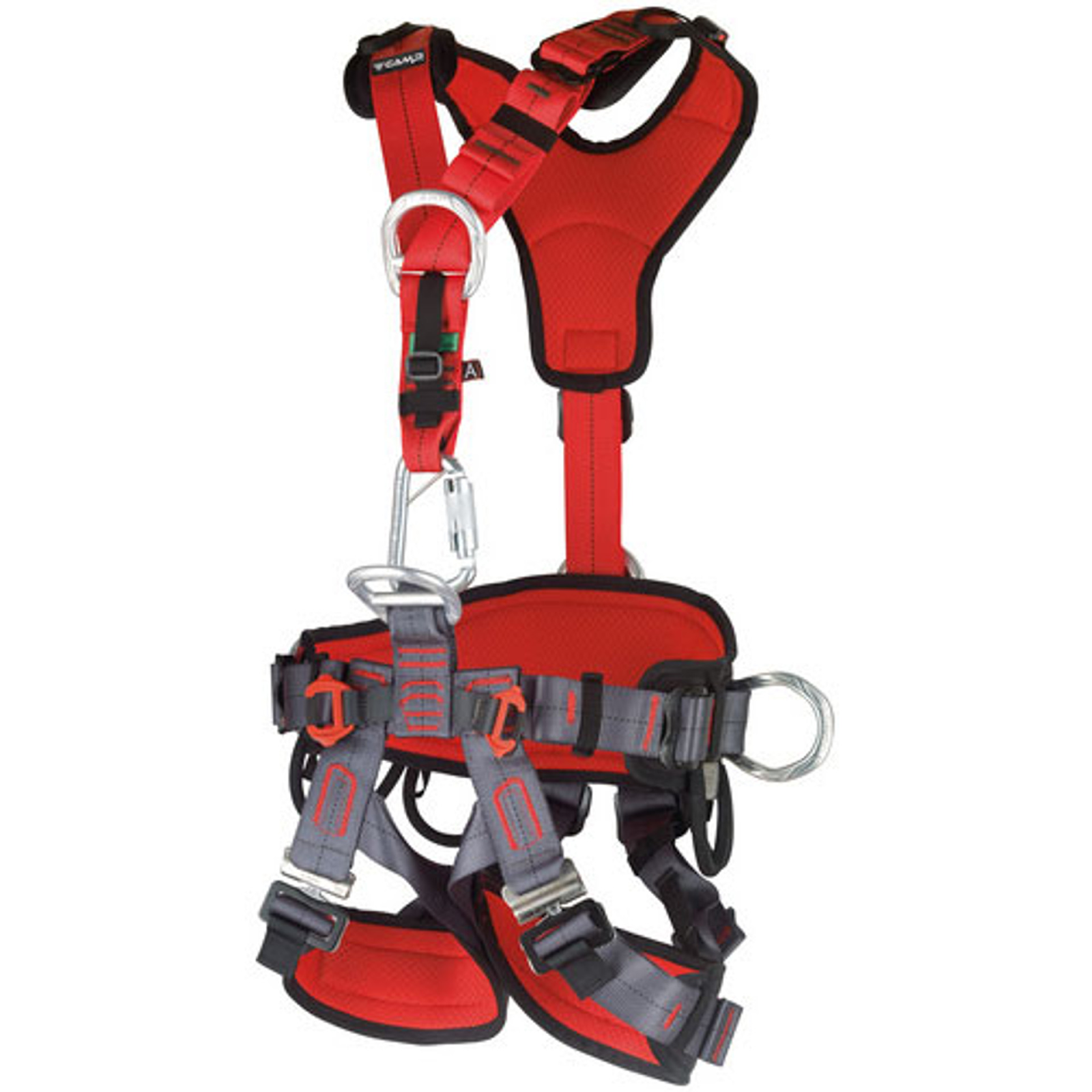
A safety harness is a body-worn device that secures the worker to a stable anchor point. It typically consists of straps that go over the shoulders, around the waist, and between the legs. The harness is designed to distribute the forces of a fall evenly across the body, minimizing the strain on any one part. When properly worn, it keeps the worker in an upright position during a fall, reducing the chance of injury due to twisting or being flipped upside down.

The safety lanyard, on the other hand, is the connecting element between the harness and the anchor point. Lanyards are often adjustable, allowing the worker some freedom of movement. What sets safety lanyards apart is their ability to absorb shock during a fall.

Many safety lanyards are equipped with a shock absorber, which is designed to elongate upon impact. This controlled elongation helps slow down the fall, reducing the peak forces exerted on the body. By decelerating the worker in a controlled manner, the risk of serious injury, such as internal injuries or broken bones, is significantly reduced.

Together, the safety harness and lanyard create a fall arrest system that prevents falls from reaching dangerous speeds, while ensuring that the force of the fall is distributed across the body. This combination helps ensure workers' safety while working at heights, offering both security and mobility in high-risk environments.

Tuesday, 19 November 2024

Carabiners or Karabiners


Carabiners


A unique feature of a carabiner is its locking mechanism. While traditional carabiners are used primarily for climbing, hiking, or securing gear, many modern designs incorporate different locking systems to prevent accidental openings. For example, some carabiners have a twist-lock mechanism, where the gate twists to lock into place, while others feature auto-locking gates that automatically engage when closed.

carabiner suppliers

This adds an extra layer of security, making them not only more reliable but also more versatile for tasks like attaching equipment or creating anchor points. What's also interesting is that carabiners come in a variety of shapes (D-shape, oval, and pear), each optimized for different uses, whether it's strength, ease of clipping, or gear organization.

Carabiner in Rope Access

Carabiners are essential tools in rope access systems, where they are used to secure ropes, tools, and climbers, providing safety and efficiency during high-angle work. Here are several ways carabiners are used in rope access:

 1. Attaching to Anchor Points
   Carabiners are often used to connect the rope to a secure anchor point. The carabiner can be attached to a fixed point, such as a structural beam, rock, or a piece of climbing gear (like an anchor sling or webbing) to ensure the rope remains in place. A locking carabiner is often preferred for added security, as it prevents accidental opening.

 2. Connecting the Rope to a Harness
   Carabiners are also used to connect the climber’s harness to the rope or other equipment. The most common connection point is the belay loop on a harness, where a locking carabiner is used to attach the rope or the rope access device (like a descender or ascender). This ensures the climber is securely attached to the rope while performing tasks.

 3. Safety and Backup Systems
   Carabiners are used in secondary or backup systems as part of redundancy. For example, an additional carabiner can be used to attach a second rope to the climber or their equipment, providing a backup in case the primary system fails. The use of multiple carabiners creates a fail-safe arrangement, reducing risk.

 4. Attaching Work Tools
   In rope access, workers often need to carry tools, and carabiners provide a reliable method for securing tools to a harness. Carabiners with locking gates can be used to prevent tools from falling while workers are suspended.

 5. Rope Management and Redirecting Lines
   Carabiners can be used in rope management—for example, when setting up rope redirects or pulleys to change the direction of the rope system. By attaching a carabiner to a pulley or redirect device, you can guide the rope through a more efficient path, especially when dealing with complex setups or when accessing hard-to-reach areas.

 6. Emergency Situations (Rescue)
   In rescue scenarios, carabiners are often used to facilitate quick rescues or provide secondary safety connections. For example, in the event of a fall or equipment malfunction, carabiners can be used to quickly create an emergency rescue line or safety tether to help stabilize the climber or rescue them.

 7. Rigging and Suspension
   Carabiners are integral in rigging systems for rope access technicians. They are used to secure ropes to support structures and provide stable suspension. They are especially useful in rigging anchor systems where several carabiners can be connected to create a strong and reliable system.

 Key Considerations When Using Carabiners for Rope Access:
- Strength Rating: Always check the carabiner’s strength rating (usually measured in kN, kilonewtons). This ensures it can handle the load you're working with.
- Locking Mechanism: For safety, always use locking carabiners when working in rope access. This prevents accidental openings and ensures a secure connection.
- Correct Orientation: When using a carabiner in a load-bearing position, make sure it is aligned properly, with the spine (the strongest part of the carabiner) facing the load. This maximizes the carabiner’s strength.
- Regular Inspection: Carabiners should be regularly checked for wear, damage, or deformation, especially if they're exposed to harsh conditions like saltwater, high heat, or chemical exposure.

By using carabiners effectively, rope access professionals can ensure both safety and efficiency when working at height or in difficult-to-reach locations.


Wednesday, 30 October 2024

CAMP carabiner and lanyards

CAMP Carabiner and lanyards

A camp carabiner is a versatile and essential piece of gear for outdoor enthusiasts. Typically made from aluminum or steel, these metal loops feature a spring-loaded gate that allows for quick and secure attachment of ropes, gear, and other equipment. They come in various shapes and sizes, catering to different activities like climbing, hiking, and camping. While they're designed to withstand significant weight and force, it's crucial to choose the right type for your specific needs and to always check for wear and tear. Overall, a good camp carabiner enhances safety and organization in any outdoor adventure!
carabiner

Carabiner suppliers UAE, offer a wide range of high-quality gear for outdoor activities, climbing, and industrial applications. These suppliers typically stock various types of carabiners, including lightweight aluminum options and heavy-duty steel models, catering to both recreational users and professionals.
Many carabiner suppliers UAE also provide related equipment, such as harnesses, ropes, and safety lanyards, and gear, ensuring that customers have everything they need for their adventures. With a growing focus on outdoor activities and adventure sports in the region, these suppliers play a crucial role in promoting safety and quality for outdoor enthusiasts in the UAE.

Lanyard suppliers UAE provide a diverse selection of lanyards for various applications, including safety, promotional events, and corporate branding. These suppliers often offer customizable options, allowing businesses to print logos or messages on lanyards for marketing purposes.
In addition to standard fabric lanyards, many suppliers also offer specialty designs, such as breakaway lanyards for safety in industrial settings, or retractable lanyards for convenience. With the UAE's focus on events, exhibitions, and outdoor activities, lanyard suppliers play a key role in ensuring that businesses and organizations have the right tools for identification and branding.

Stay Protected, Explore Fearlessly

Stay Protected, Explore Fearlessly The Importance of Adventure Sports Helmet in Outdoor Activities Adventure sports are all about thrill, e...